Skid steers, tractors, pallets, vehicles, scissor lifts: a good flatbed will haul almost anything. But "flatbed" covers a few very different designs, and picking the wrong one means fighting your trailer on every load. Here is how the three most common styles compare.
Equipment hauler: low deck, easy loading
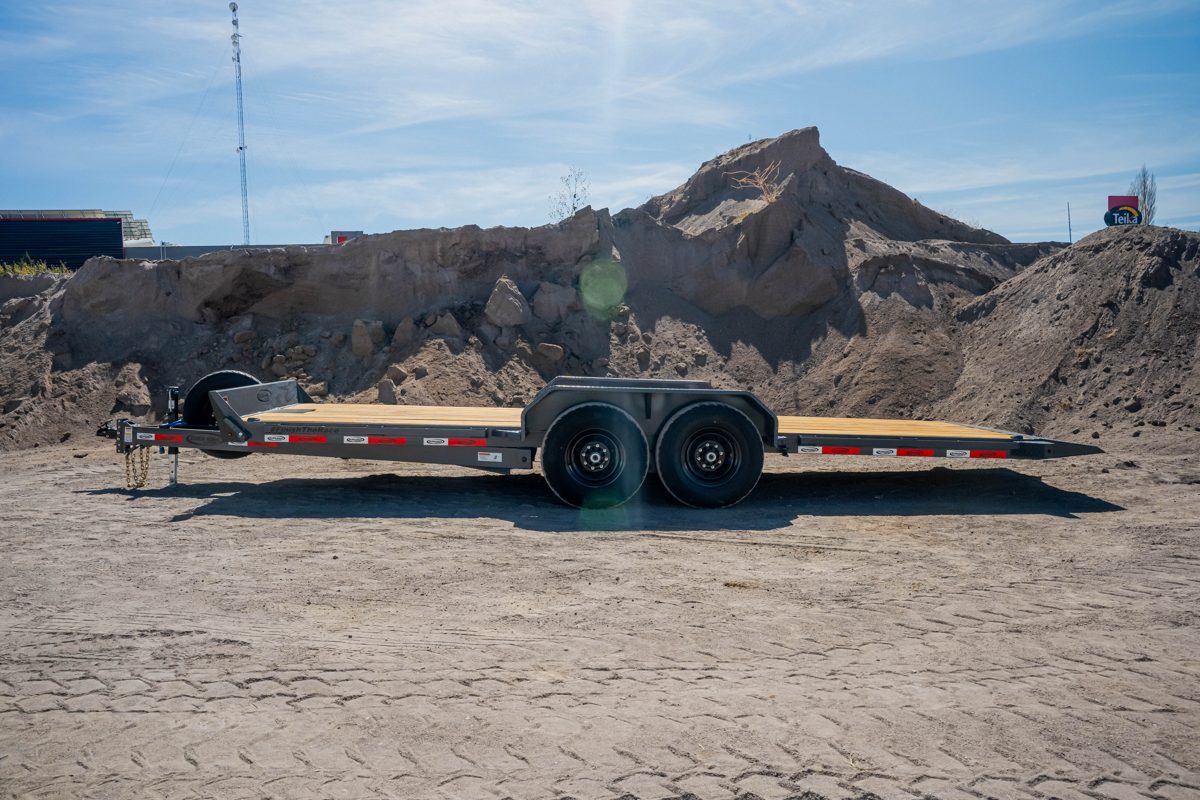
On an equipment hauler the deck sits between the wheels, so it rides low to the ground. A low deck means a gentler ramp angle, which makes it easy to drive machines on and off.
- Pros: low loading height, gentle ramp angle, stable center of gravity.
- Watch out for: the fenders. Usable width is limited to the space between them, so measure your machine, tracks or tires included.
- Best for: skid steers, compact track loaders, mini excavators and tractors that fit between the fenders.
Deckover: full width for wide loads
A deckover trailer puts the deck on top of the wheels. You give up some height, but you gain the full width of the trailer, with no fenders in the way.
- Pros: full-width deck, room for wide equipment, and easy forklift loading from the side.
- Watch out for: a taller deck, which means steeper ramps. Longer ramps or a dovetail help.
- Best for: wide equipment, palletized material, building supplies and mixed loads.
Full tilt: no ramps at all
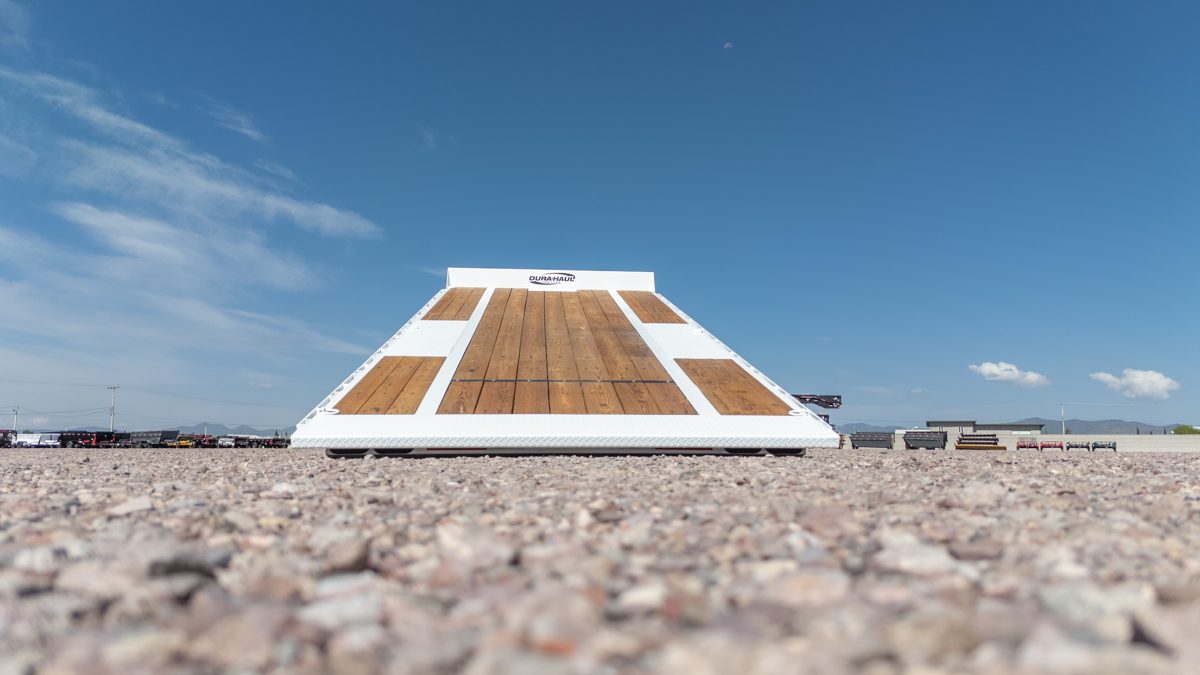
On a full tilt trailer the whole deck tilts down to the ground, either by gravity (controlled by a hydraulic cylinder) or with a power-up system. You drive straight on and the deck levels out.
- Pros: very low load angle, no ramps to lift or store, fast loading and unloading.
- Watch out for: more moving parts, so keep the tilt cylinder and pivot points maintained.
- Best for: low-clearance machines (scissor lifts, mowers, cars), and anyone loading several times a day.
Four questions that pick the trailer for you
- How wide is your widest machine? If it does not fit between the fenders, you need a deckover.
- How low is it? Low ground clearance points to a full tilt or a low equipment hauler.
- How do you load? Forklift from the side favors a deckover. Driving on favors a tilt or an equipment hauler.
- How much does your heaviest load weigh? Add up machine plus attachments plus fuel, then choose a trailer whose payload leaves some headroom. Never plan to run at 100% every day.
Weight and balance basics
Whatever you choose, load it right. As a rule of thumb, aim for roughly 10–15% of the total trailer weight on the tongue for a bumper pull, and around 15–25% for a gooseneck. Too little tongue weight causes sway, and too much overloads your truck's rear axle. Secure every machine with rated chains or straps at all four corners.
Browse our deckovers, full tilt trailers and equipment haulers, or send us your machine's dimensions and we will tell you which trailer fits.