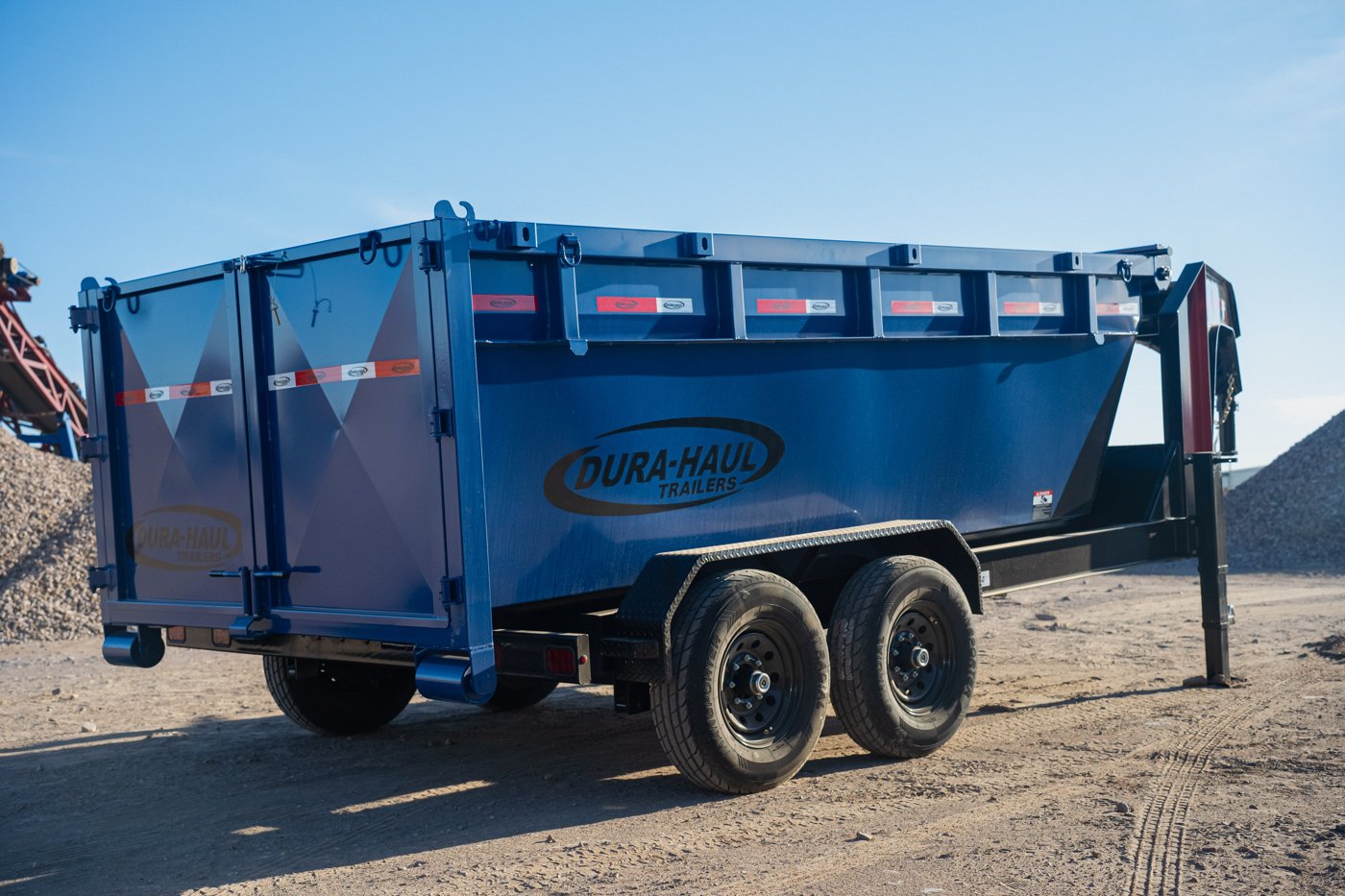
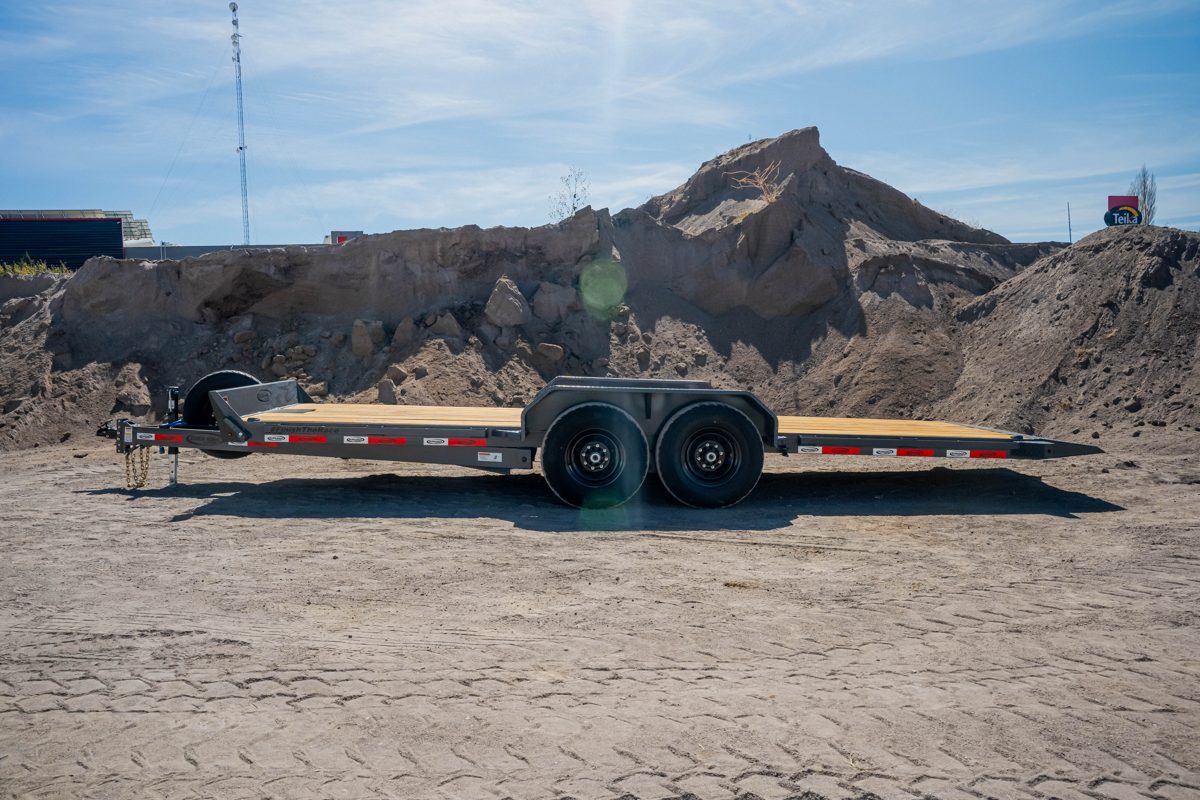
Most trailer problems on the road start as something small in the driveway: a latch that was not closed, a tire running low, a chain that was too long. A quick walk-around catches almost all of them. Here is the checklist we recommend before every haul.
1. Coupler and hitch
Make sure the ball size matches the coupler (it is stamped on both), the coupler is fully seated and latched, and the latch is pinned. On a gooseneck, confirm the locking mechanism is engaged. Lift the tongue slightly with the jack to be sure it will not pop off.
2. Safety chains
Cross the chains under the tongue so they would cradle it if the coupler ever let go. Leave enough slack to turn, but not so much that they drag on the road.
3. Breakaway system
Clip the breakaway cable to the truck, not to the safety chains. Check that the breakaway battery is charged. It is what applies the trailer brakes if the trailer ever separates from the truck.
4. Lights and signals
Plug in the connector and have someone check running lights, brake lights and both turn signals. Dirty or corroded plugs are the most common cause of dead lights.
5. Brakes and brake controller
Set your brake controller gain for the load you are carrying. Heavier loads need more. Do a slow test stop before you reach the road; the trailer should pull you to a smooth stop without locking up.
6. Tires
Check pressure cold, before driving, and inflate to the pressure on the trailer's VIN tag or the tire sidewall. Look for cracks, bulges and uneven wear. Uneven wear is often the first sign of an axle alignment or bearing problem. Carry a spare that is actually inflated.
7. Wheels and lug nuts
Look for missing or loose lug nuts. On a new trailer, or any time a wheel has been off, lug nuts should be re-torqued after the first 10, 25 and 50 miles, because wheels seat themselves as you drive.
8. Load securement
Use chains or straps with a working load limit suited to what you are hauling, and tie equipment down at all four corners. Lower buckets and attachments to the deck and set the parking brake on anything with wheels.
9. Load balance
Place about 60% of the cargo weight ahead of the trailer axles. That keeps enough weight on the tongue to prevent sway. If the trailer wants to wander at speed, stop and re-balance the load.
10. Final walk-around
Raise the jack all the way, stow and pin the ramps, close and latch any gates, and on dump or tilt trailers make sure the bed is down and the hydraulic controls are off. One last look underneath for anything hanging or leaking, and you are ready to roll.
On the road
On longer trips, stop after the first few miles and re-check straps and chains, since loads settle. At fuel stops, feel the hubs carefully: a hub that is much hotter than the others can mean a bearing or brake issue.
Always follow your trailer's owner's manual and your state's towing laws. Need brakes, bearings, lights or tires looked at? Talk to our service team and we will get it checked out.